
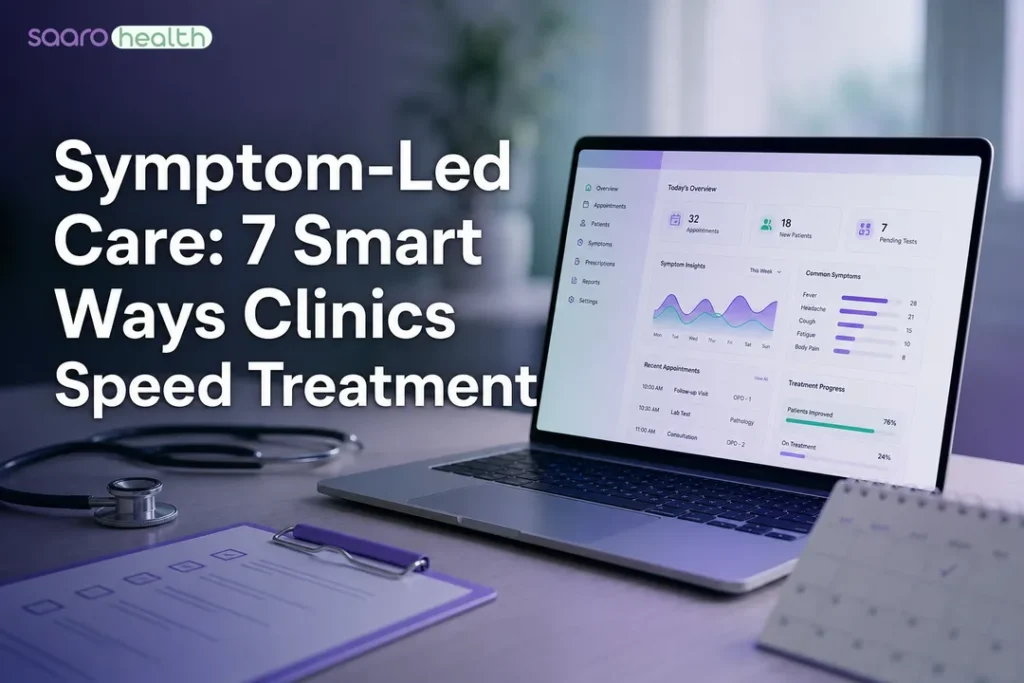
Indian patients often search for a clinic near me while juggling symptoms and treatment choices. In Symptom-Led Care: 7 Smart Ways Clinics Speed Treatment, we show how symptom-led care turns confusion into clear next steps. You will learn how to spot causes of symptoms, decide when to see a doctor, and choose treatment options with confidence—while clinics run smoother and faster.

Why symptom-led care matters in busy Indian clinics
In our work with clinics, we notice a pattern. Patients arrive with a story; clinicians need structured data. When teams lead with symptom-led care, they capture both. As a result, appointments stay focused, and diagnosis and treatment move quickly.
Moreover, Indian clinics face a dual burden of common health problems and rising lifestyle diseases. According to the World Health Organization, noncommunicable diseases account for 74% of global deaths. WHO’s NCD factsheet highlights why early diagnosis and continuous follow-up save lives. Therefore, a patient care clinic that translates first symptoms into structured notes gains precious time.
What patients describe vs what clinicians need to know
Patients often speak in feelings. They say, “My chest feels heavy after dinner,” or “This cough won’t stop.” Clinicians, however, think in timelines, triggers, vitals, and differentials. A simple intake flow bridges this gap: onset, duration, intensity, triggers, associated signs, and self-medication. Consequently, the medical consultation starts strong.
Importantly, this approach supports both acute illness treatment and chronic condition management. For acute issues, such as fever with a rash, the priority is safety and speed. For chronic problems, like diabetes with foot numbness, the focus is risk scoring and consistent tracking.
Evidence-backed context: why early diagnosis changes outcomes
Early diagnosis reduces complications, lowers total costs, and improves quality of life. Furthermore, clear symptom capture reduces diagnostic error by narrowing the differential diagnosis. For a deeper look at how clinicians generate and refine differentials, see this NCBI Bookshelf overview of differential diagnosis. In practice, a strong first note sets up precise orders and faster follow-ups.
From symptoms and treatment to systems: the clinic playbook
Great care relies on predictable systems. Therefore, build a repeatable loop that connects patient intake, symptom diagnosis, orders, and follow-up reminders. When teams run the same playbook every time, patients experience less waiting and more clarity.
Build a simple triage-to-treatment loop
First, agree on a shared intake checklist across the front desk, nursing, and doctors. Next, embed decision cues for red flags and routine care. Then, automate the next step—labs, prescriptions, or referral—so nothing falls through the cracks.
Triage to follow-up in four steps
- Intake and risk flags: capture vitals, onset, triggers, and medications; mark danger signs immediately.
- Doctor for symptoms: review a concise note, confirm likely causes, and explain the plan in plain language.
- Treatment and tests: print or send e-prescriptions, order diagnostics, and schedule the next visit on the spot.
- Follow-up nudges: send reminders, track results, and document outcomes for patient education and continuity.
Because good systems matter, Indian clinics also benefit from secure digital records. The National Health Authority’s Ayushman Bharat Digital Mission promotes the ABHA number to link health records across providers. Learn how digital health IDs support continuity on the ABDM official portal.
We have seen clinics implement this loop with minimal friction using one dashboard. With Saaro Health, teams digitize records once and reuse data across appointments, reminders, and billing. Consequently, admin work shrinks while face time with patients grows.
How digital workflows cut delays and errors
When reception, nursing, and the doctor share the same screen, the handover becomes seamless. Notes capture structured data, so the plan flows into orders without retyping. As a result, fewer errors reach the pharmacy or lab, and patients leave with confidence.
Symptom-led care in scheduling and follow-ups
Use triage tags to automatically set review windows. For example, a child with wheeze might need a 24-hour review, while a stable blood pressure check can wait two weeks. Because the system tracks promises, no one chases sticky notes, and patients receive timely calls.
Small wins that add up
- Smart slots: reserve early-morning blocks for fasting labs or high-risk reviews.
- Checklists: add vaccination due dates to improve preventive healthcare.
- Templates: pre-fill plans for common health problems while allowing doctor judgment.
- Alerts: surface drug–drug interaction checks before printing a prescription.
Additionally, automate patient messages that teach the next step. Short SMS tips improve health awareness and support adherence. For instance, a post-visit note can remind patients to capture home readings before the medical advice clinic follow-up.

When to escalate: red flags and right specialists
Clear thresholds remove doubt. If chest pain follows exertion, if speech slurs, or if fever stays high in an infant, escalate now. Because time matters, explain to patients why a specialist consultation or emergency visit is safer than waiting.
Similarly, create a list of local clinic services and referral partners for same-day or next-day slots. A shared directory reduces calls and helps patients feel held. In addition, keep maps and simple directions handy so families reach the right door on the first try.
Second opinions and health checkups without confusion
Sometimes, patients need a second opinion doctor to gain clarity. That does not signal distrust; it shows care. Offer to forward notes, labs, and images so another expert can review them efficiently.
Meanwhile, guide patients on a periodic health checkup plan. Adults with risk factors may benefit from scheduled screens for blood pressure, glucose, and lipids. For families asking about symptom based treatment versus routine prevention, clarify that both matter at different times.
Coordination tips that build trust
- Summarize the visit in one sentence on the discharge note.
- List warning signs and the earliest follow-up date.
- Share your clinic’s after-hours contact method for urgent doubts.
- Encourage a buddy to accompany elderly patients to improve recall.
Your next step, made simple
Every patient wants straight answers. Therefore, use a health symptoms guide at the front desk to collect accurate details. Then, move from symptom diagnosis to a clear plan, and close with plain-language instructions. If uncertainty remains, book a prompt review.
From our experience building unified tools for Indian practices, three moves change everything. First, set one intake standard across the team. Second, automate what repeats. Third, track revenue and outcomes in the same place so clinical and business goals align. With our clinic growth platform, doctors gain a predictable rhythm without drowning in admin.
Of course, medicine has nuance. Results vary by the disease symptoms and causes, access to diagnostics, and how closely patients follow advice. This article supports patient education; it does not replace a qualified clinician’s judgment. For emergencies, seek immediate help.
Finally, when you compare symptoms and treatment choices, choose systems that reduce friction. With symptom-led care, teams deliver faster decisions, safer prescriptions, and kinder communication.
Contact Saaro Health
Contact Saaro Health
Phone: +91 8290306004
Website: saarohealth.com
Email: support@saarohealth.com
Head Office
Jaipur, Rajasthan, India